Teal vs Hierarchy
Thursday, 30th July 2026 from 12:30-1:15pm at The Track

“Transforming Modern Business Models by Understanding Human Behaviour”
A Bite Size Lunch & Learn Session at The Track
on Thursday, 30th JULY 3026 from 12.30 - 1.15pm
Key Learning Points
As the great theorist Buckminster Fuller famously said:
“You never change things by fighting the existing reality. To change something, build a new model that makes the existing model obsolete.”
- The Paradigm Shift (from need to know to transparent, from exclusive management to inclusive community, from Supervisory Hierarchy to Trust, form Parental to Partnership, from Immature to Mature)
- Decentralised Self-Management
- Cultivating Wholeness
- Following an Evolutionary Purpose
- Local Case Study - The RAFA 381 Club on Waterloo Square
Further Notes
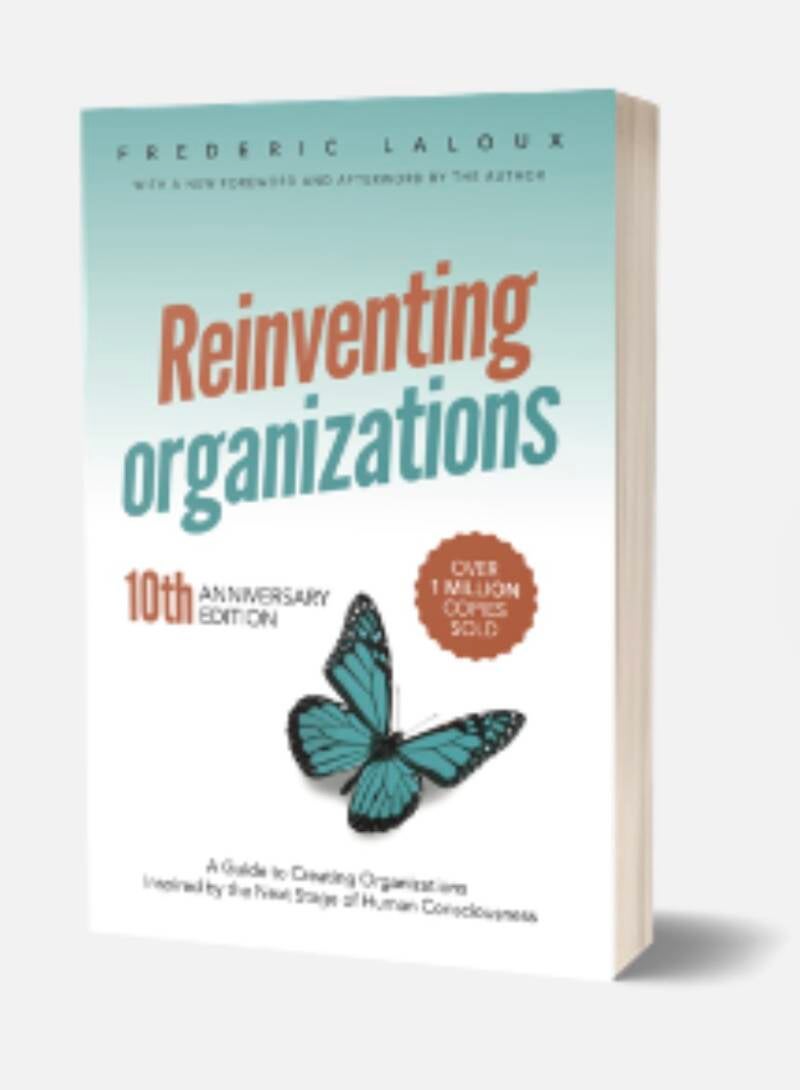
- The Paradigm Shift (Teal vs. Hierarchy): The session introduces Frederic Laloux’s "Teal" model, which moves away from traditional, top-down corporate machines and instead treats organisations like adaptable, living ecosystems.
- Decentralised Self-Management: Attendees will explore how teams can operate efficiently through peer-to-peer relationships and shared decision-making, removing the need for rigid boss-subordinate hierarchies.
- Cultivating Wholeness: The discussion will highlight how Teal organisations foster high trust and psychological safety, encouraging people to drop their "professional masks" and bring their full, authentic selves to work.
- Following an Evolutionary Purpose: Instead of forcing artificial five-year growth targets, Teal structures focus on listening and adapting to what the organisation naturally needs to become over time.
- Local Application (The 381 Club): Using Bognor Regis’s own The 381 Club as a real-world benchmark, the session will analyse how its community-driven, low-bureaucracy model successfully brings these three Teal breakthroughs to life locally.
Summary
The Teal Talk script advocates for a transition from traditional, rigid organisational models to a "Teal" paradigm, which views organisations as living, adaptable ecosystems rather than mechanical apparatuses.
- Organisational Progression: The talk traces the evolution of business structures from "Red" (power-based) and "Amber" (hierarchy-based) to "Orange" (machine-like/KPI-driven) and "Green" (culture-focused), ultimately proposing "Teal" as the most effective model for modern challenges.
- Decentralised Self-Management: Teal structures replace traditional bosses with peer-to-peer relationships and an "Advice Process," where individuals make decisions based on consultation with affected parties and experts rather than top-down permission.
- Cultivating Wholeness: This principle fosters psychological safety, allowing employees to shed "professional masks" and bring their full, authentic selves to work to reduce burnout and increase innovation.
- Evolutionary Purpose: Instead of adhering to rigid five-year plans, Teal organisations listen and adapt to their environment, growing based on the genuine needs of their ecosystem rather than arbitrary growth targets.
- The iSHARE Strategy: The talk introduces the iSHARE agenda—Integrity, Safety, Health, Access, Resilience, and Enrichment—as a framework to ensure organisations remain fit for purpose and fluid enough to pivot.
- Real-World Application: The 381 Club in Bognor Regis is highlighted as a practical example of Teal principles, demonstrating that even traditional community organisations can thrive by replacing bureaucracy with community-led, trust-based ecosystems.
- Strategic Shift: The presentation challenges leaders to abandon fear-based management and performative KPIs in favor of structures that prioritise empowerment and responsiveness to a volatile world.
Frederic Laloux's Reinventing Organizations is considered by many to be the most influential management book of the last decade. It has inspired thousands of organizations throughout the world to take a radical leap and adopt a whole different set of management principles and practices.
It's also a word-of-mouth phenomenon, propelled by a deeply caring and generous community of readers. Self-published with no PR, it has sold over 1 million copies and has been translated in numerous languages.